Saturday, July 12, 2014

money (that's what I want)

You're probably not old enough to remember this song, but it was recorded by a bunch of people, including the Beatles. It came to mind the other day because there's been a lot of talk about how art has become commodified and some young artists are chasing after sales at the expense of developing their work. Art is big business now, and big collectors are chasing after the next big thing.

Of course this isn't a new phenomenon. Jean-Michel Basquiat was the poster boy (pun somewhat intended) for a young brilliant artist who cranked out work and flamed out early, dying before the age of 30, and his works command enormous prices now, into the millions. There's a young artist named Oscar Murillo who is being called the next Basquiat, as collectors line up to buy his work.

Anyway, the point of this post is to consider how this climate of money and sales is impacting the way artists approach their art practice. I'm not in the thick of it- I know what I do, and sales are great, and allow me to have a nice studio and pay for my supplies, but I don't make work for the reason of selling it. If I did, I'd be back doing illustrations for Lord & Taylor. It's stultifying to have to think of whether work is acceptable to the market. You have to have the freedom to develop as an artist, go down unknown avenues, fail miserably and throw things away (or not, saving them for a more objective look much later,) follow your curiosity and interests. I feel this way: art is a job and serious attention must be paid, time must be spent. It's frustrating and joyful and I'm fortunate to be able to do it. 

The other day a friend of mine, Edward Winklemann, wrote a post on his most excellent blog about how he, as a gallerist and lover of art, was dismayed at the way some artists pursue artmaking solely to make money and become famous, with a sense of entitlement and an attitude of insincerity and even dishonesty. Since I teach (actually make that past tense, as I'm letting go of my adjunct position for now) I notice that students do have a very skewed idea of what it takes to have an art career. If they were at schools in New York fame and fortune would be even more tantalizing. 

Here's a quote from Edward's post:

Increasingly I'm reading online this or that artist's opinion that cheating the system or scheming within the system to get ahead, through the creation/promotion/sale of their art is not only OK with them, but their due, because of how difficult they feel their life has been.

Edward feels, as I do, that art has a value in itself that is outside the market system, and perhaps it's with a bit of wishful thinking, feels that artists themselves should at least adhere to an ethical code that befits an individual who is creating beauty and/or thought-provoking works, as opposed to a Wall Street person, for example. (Insert dose of cynicism here about Wall Street types, that is probably unwarranted.)

Artists should emerge from their thorough explorations in looking/seeing and in particular their education in the humanities as, well, better humans. In my experience, most do. But specifically, within my concept of the role of art as a form of religion, artists are the leaders...the perceptive ones able to see and communicate sincerely with the rest of us the more important or at least interesting aspects of what it means to be a human here and now. That position comes with certain responsibilities, though. If they're not at least attempting to be good humans (and that is incompatible with willingly scheming or cheating others), then they're just hucksters demanding attention for wholly narcissistic reasons. 


There's a lot more to his post and I don't want to misrepresent what his thoughts are. He's looking to art for spiritual sustenance. It made me think about one particular thing I always told my students: don't put anything out there in the world unless it's the very best you can do. The world has enough garbage as it is. Should we as artists be held to a higher standard? It seems to me some humility and gratitude is appropriate.


Wednesday, June 11, 2014

newsprint


All the News That's Fit to Print, at the Center for Contemporary Art in Santa Fe, was a big success- lots of people visited and enjoyed it. It was great fun to put it together with Erin Elder of CCA. I've published images from some of the works already, so this is a summary of the show.

On the last day, we had a panel discussion with three of the exhibiting artists, whose works are below:
Adam Simon
Elissa Levy
Pat Boas


It was so interesting to hear the other artists talk about why they are attracted to working with the New York Times. Pat Boas talked about living abroad and how other countries have a national newspaper- the Times seemed to be the closest thing we have to a national newspaper. She uses content from the Times- in this work, she traced all the heads from the photos on the front page on tissue paper and each sheet would be used for a whole month, so the outlines overlap and fill the page. There are twelve drawings, one for each month. 

Elissa Levy also talked about being at a residency in Scotland and seeing how the newspapers there were full of sports. She and I are sometimes attracted to using the same front page photograph. She alters the page by painting and cutting, creating a three dimensional work that's colorful and thought-provoking.

Adam Simon's work was from a number of years ago, and stemmed from his desire to take himself out of the work by using the pre-existing design from the front page, painting out the photographs with white red or black paint, depending on his own system of hierarchy, affixing the pages to canvas and sealing them with resin. He said something at the panel that I loved- that we as artists are lucky that we can take a memorable moment from time and freeze it forever in an art piece. I think of my own work that way, because each of my cut New York Times pieces commemorates a historical event. I choose the page that jumps out at me from the paper in the morning when I open it.


I created a work specifically for the exhibition, titled Quotidian. I made vector files of the page layouts from the Times for a week, seven layouts in all. I had four of each of these laser cut into handmade gampi paper, which was folded and hung on a tall metal ladder, 16 feet to reach the ceiling joists of the gallery. The rungs of the ladder got further apart as it went up, so the paper sheets that were layered fairly thickly at the bottom were thinner at the top and seemed to float up into the space above. The image below shows the piece on site and a detail.


Other artists in the show were Guy Richards Smit, whose large watercolor facsimile of the paper full of his own funny made up news stories, was open on a large table so viewers could read it; Lauren Di Cioccio, who seals the paper in a muslin sleeve then embroiders through it to enhance the front page photograph; Francesca Pastine, who contributed a sculptural mask constructed from the financial pages and covered with copper leaf, plus moody photographs of other similar works. Shanti Grumbine recorded a sound piece that used redacted text from the paper as a kind of musical score- accompanied by a folio of prints of the score plus another print using the newspaper's design and text but overlaying her own pattern on the photographs; AJ Bocchino sent a large digital work on canvas that used headlines concerning the US relationship with Saudi Arabia dating back to the 1940's; and Fred Tomaselli painted his own phantasmagorial image on the front page photograph. 


Previewing this, I see that the text is all wonky, and I am trying to figure out how to fix it! For now, it'll have to stay put.  Why, blogger? Trust me folks, I've tried to edit so all the text is the same size, and on my page it is, but as you see it, it isn't. Mercury is in retrograde, so I've been told.

Sunday, February 23, 2014

fighting the doldrums

February. Isn't it the worst month? That's why Valentine's Day is during February. What else can you do but wait for spring? Of course Valentine's Day can be pretty awful- if you're in a relationship there's a lot of pressure. If you're not, you feel left out. But a day dedicated to love seems important and breaks up the month a bit.

Here in Santa Fe, we are in a terrible drought. We haven't had much snow, maybe an inch or two, since before Christmas. And the spring winds are starting- which kicks up the pollen, which started being released early this year, because of the warmth and dryness. The longer I live here the more I am susceptible to allergies- juniper in particular, and that's what's flying around now. You know how you look out at the New Mexico landscape and you see these green bushes all over the place?

The culprit


Anyway. I will be posting good photos of our "All the News" exhibit soon, but meanwhile here is a link to a wonderful article, one of three that were published around the time of the opening.


Wednesday, December 25, 2013

end of year madness

Today is Christmas Day, a day for family and friends. I'm off to a movie along with scads of other people, but first a round up of news. The Art Miami Context fair was very successful for my gallery. They sold two of my New York Times pieces and lots of other artists' work. I was in Miami for the fairs and got to see old friends, a bunch of art, and enjoy my home town.

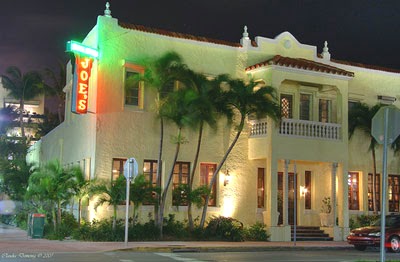
And that means: STONE CRABS. Anyone who has been to Miami Beach knows Joe's. It's been renovated and is a lot bigger than the old days. Back then you waited two hours stuffed into a narrow bar. Now you wait maybe an hour in a couple of anterooms and a bar. But if you go all the time, you get in right away. You have to know the trick.

Joe's has a little takeaway cafe now. I recommend you try it for lunch when things aren't as insane. Stone crabs are supposedly eco-friendly, because the crab grows another claw. I'm not positive this is the case and anyway it must hurt the crab to have his arm torn off, but please: they are divine and I don't want to think about it.


Since returning from Miami I've hit the ground running. Along with Erin Elder I'm co-curating an exhibition called "All the News That's Fit to Print," art that uses the New York Times, at the Center for Contemporary Art here. The artists use the newspaper in varied ways. Some use the paper itself for sculptural and wall based works, like I do. One artist whose work I recently discovered is Elissa Levy, from Brooklyn. Here is one of her works that will be in the show, "Expected to Rise."
Other artists highlight and collect bits of content from the paper- here is a work by Pat Boas, of Portland, Oregon, in which she has traced heads from photos on the front page, each drawing consisting of tracings from a full month, with a total of 12 drawings in the series, representing one year:
Everyone bemoans the sad fate of daily newspapers. With Jeff Bezos buying the Washington Post, it should be interesting to see what new ideas he comes up with. I know the Times has invested in more multi-media reporting, trying to keep up the subscriber base. Personally, I still read the print version of the Times every day and have been for maybe forty years, but I like to read it online occasionally when one of those multi-media stories runs. There was recently a series on a homeless child in New York that was heartbreaking- what is now referred to as "long form" journalism at its best in my opinion. To be continued. Meanwhile, the front page with its compelling above the fold photograph continues my morning ritual.


Monday, August 12, 2013

the desert

Growing up in Miami Beach, then living in New York and Connecticut for so many years, I was used to humidity and green-ness. The desert has neither, but this is the monsoon season, meaning that we get rain fairly often, sometimes a bit every day, sometimes a heavy rainstorm that sends water rushing into the arroyos with great force. I live near the Santa Fe River bed, which used to actually be a river, but is an arroyo now. Arroyos are dry stream beds that fill with water occasionally, during heavy rains. They can be dangerous actually, because if anyone is in there and the water starts to flow, it can cause drownings. We get flash flood warnings here when that's about to happen, but maybe the kids playing didn't get the alert.

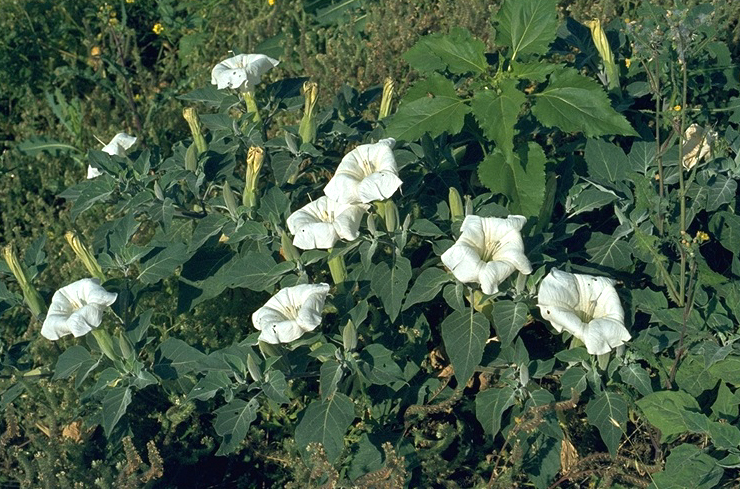
Anyway, during monsoon season, the desert starts to grow grasses and things and it actually looks green around here. Also, flowers bloom. It's interesting that the landscape here is at its most beautiful in September. I've posted about the aspen trees in the past. Today I'm posting a photo of a plant I'm kind of obsessed with, jimsonweed. The bush we walk by is pretty large and the flowers are large-ish too so I can see from afar when it's in bloom. For a while it was so dry, no flowers to be seen, but lately every morning it's got lots of them. They bloom at night so by noon they're closed. They don't last long at all. I'm pretty convinced that they only bloom once, but a friend says that's not so. This plant is very poisonous, which makes it more exotic seeming and a little sinister.

Georgia O'Keeffe painted them often. Here's just one example. 

The plants in the desert are very sculptural and seem almost prehistoric. I try to capture them when they are in bloom but it seems like I never have my phone with me at the right time and the next time I walk by them the flowers are gone. The plant life can be very ephemeral. One day a cactus will look all brown and gnarly, and the next day a beautiful pink flower will have appeared.


Friday, July 26, 2013

infinity


The artist Walter de Maria died yesterday. 

I saw this wonderful work at LACMA last year. It took up the entire Resnick Pavilion there and was meant to catch the light in different ways. I always enjoyed de Maria's work- the Broken Kilometer and Earth Room in Soho in NYC were like art touchstones. They were just There, through the years, supported by the Dia Foundation, which also supports Lightning Field here in New Mexico. I have yet to see it- you have to make an appointment, then they pick you up and take you to a little cabin, where you stay overnight and are free to wander the landscape and enjoy the de Maria piece. 400 polished stainless steel poles, set in the ground in such a way that they are perfectly aligned at the top. An incredible feat of planning and engineering. Maybe not like the Great Pyramids, but something that inspires awe. 

De Maria's work was about the finite and the infinite at the same time. The work was strictly delineated by imagined or built borders, or it was titled by its size (as in "Broken Kilometer.") But the scale was such that you almost couldn't see its end. A horizon would form and you would be aware that yes, there is an end, but the view seems limitless and overwhelming. He was a singular artist- I can't think of anyone who has created work that is quite like that, and he will be missed.

Saturday, July 6, 2013

where does inspiration come from?

Someone posted this on Facebook the other day and I saved it. With all the controversy and discussion about appropriating images, it's easy to feel caught on one side or other of a bright line of so-called originality.

I remember one time hearing Chuck Close speak. He said that he, like all artists, stood on the shoulders of all who had gone before him. To me that was not just about clearing a path, though that's a part of it, not just about being a mentor, though that's a part of it too; but also that we look at other work, we digest, we ponder. Maybe those guys who painted on the walls in Lascaux didn't have any other art to look at, but since then, we have.

The internet has given us a great gift here, but it's a bit of a hot coal, and it also requires some responsibility. I live in Santa Fe. I get to New York, to California, and other places that have some terrific museums and galleries, but for me scrolling through tumblr is great fun and sometimes I come across something that really hits me. (Often, actually.) I say it requires responsibility because sliding an image onto your desktop is one thing; reposting it somewhere, such as pinterest or tumblr, is another, and I would never post something without a link to its author's website. (There is software that allows you to embed this information, invisibly, into your image. See digimarc.)

Anyway, a couple of weeks ago I came across the work of Marisa Merz. I can't link you to a website because she has none. I think she may be in her 80's- she is the widow of Mario Merz, and both of them are part of the Italian group of artists engaged in what they called arte povera. She has been honored this year at the Venice Biennale. She shows with Barbara Gladstone in New York. I wish I had seen that show!

So here is a piece of hers, a small one. There are so many things I love about this little piece. I love the apparent casualness of it- almost like she found a bunch of wood and piled it up together. Notice how the image and the wood that extends beyond it is all pushed to the left and the use of gold on such a humble work. She used the wood (all bits of found wood, as I understand) to extend the diagonal in the image- or maybe it was the other way around. There's not a lot of color. Then it's just put on this funny base of sorts, and being placed on a fancy shmancy marble lintel adds a bit of humor and contrast.

Looking at images of hers made me think about how I might work with paper and wood in a less polished way. I really love the nature of paper, and paper comes from wood. Why not combine them? And then ink and gold leaf have their own materiality. Also, I just had a framer possibly destroy a piece by stupid accident- why have to deal with framers at all? Now you might ask, how do you protect and dust a paper piece that isn't framed? And I say: carefully.