Monday, September 22, 2014

girl power?


This is going to be kind of a mashup of three articles I've read recently. They're written by, or about,  interesting and accomplished women.

So first of all, you recognize Linda Carter as Wonder Woman of course. Jill Lepore wrote a piece in the New Yorker about her history. There's a firewall, subscribers only, so I'll just summarize a little of it. Wonder Woman was created in 1941 by William Moulton Marston, "a psychologist with a PhD from Harvard. A press release explained, 'Wonder Woman was conceived ... to set up a standard among children and young people of strong, free, courageous womanhood; to combat the idea that women are inferior to men, and to inspire girls to self-confidence and achievement in athletics, occupations and professions monopolized by men' because 'the only hope for civilization is the greater freedom, development and equality of women in all fields of human activity.'" This was only a few years after Superman and Batman were introduced.

Lepore traces Wonder Woman's origins to what she calls "feminist utopian fiction," which centered on Amazonia. The Amazons of Greek myth escaped to an island when men tried to make them slaves, and there they lived happily in their matriarchal society. It's also part of the story that the Amazons cut off one breast, the better to handle a bow and arrow. So the Wonder Woman that we know is actually quite anatomically incorrect. But what I really found interesting is that Wonder Woman was inspired by Margaret Sanger, the early champion of (then illegal) birth control, who was a member of Marsten's family. 

Today in the New York Times (another firewall, sorry) an article that coincided nicely with Lepore's, and this was all new to me as well. A professor, coincidentally also at Harvard, named Amy Cuddy, gave a TED talk that is the No. 2 most viewed of all time. The talk is on "power poses" and she references the Wonder Woman pose, that is, legs apart, hands on hips, head held high, as the key to better self-esteem, better mood, better work habits, more success. Even just visualizing a more confident pose seems to work. "Women often shrink in public settings, she said. The men in her Harvard classes shoot their arms straight up to answer questions, while the women tend toward a bent-elbow wave. Along with touching the face or neck or crossing the ankles tightly while sitting 'these postures are associated with powerlessness and intimidation and keep people back from expressing who they really are,' Ms. Cuddy said."

Even the way you get up in the morning can make all the difference in your day. Don't just rise from a fetal position- stretch your arms and legs out, and you will feel more optimistic. Sounds good. I'm going to try it, it can't hurt, right?

Now for the bad news. An article recently posted on artnet was titled "We Asked 20 Women "Is the Art World Biased?" Here's What They Said." And here's where I want to scream. Because no matter how much we talk about this, no matter how many women are now museum curators, the statistics concerning women artists are stubbornly unchanged, or nearly so. See another post on artnet: "Art World Bias by the Numbers." Women run just a quarter of US art museums with budgets over $15 million. Those leaders make just 71 cents for every $1 earned by men. New York magazine critic Jerry Saltz did his own tally of Artforum ads in the September issue: Of 73 ads for New York galleries, 11 were for solo shows by women—15 percent of the total." Women make up half of the graduating classes in art schools. So where do they go? What do they end up doing?


The reasons are largely market driven- male artists bring higher prices for their work than female artists. But there are biases ingrained in aesthetics as well, with a woman's "point of view" not valued as highly. Further consider the age factor, which exists for women but not for men.

I quote Margaret Harrison's response on the first artnet article:
As a pioneering third wave feminist artist, now observing the fourth wave (I count down from Mary Wollstonecraft and her A Vindication of the Rights of Woman), from a cursory observation, it still does exist. Even taking into account that the 2010, 2012, and 2013 winners of the Turner Prize were women, in its history since 1984 there have been 24 men to six women receiving the award. On a personal note, in 2013 I was awarded the Northern Art Prize, (known as the Turner Prize of the North). This prize, which doesn’t have an age limit—as in the case of the Turner—so is a non-ageist award, turned into an ageist event anyway. Nearly all the press, including the BBC, responded with the phrase “Pensioner wins the Northern Art Prize.” Now, there had been at least one male artist over the age of 50 (albeit not as old as myself) who had previously won the award, but age was not even discussed. It took the shine off the award [for me], as it intimated that it wasn’t about quality but more about the age of a woman artist. I subsequently was awarded one of the Paul Hamlyn [Foundation Awards for] Artists and there was no mention of age or gender, for which I will be forever grateful.
—Margaret Harrison, Artist

It's going to take a lot more than power poses to make a dent in the status quo. But Wonder Woman doesn't give up.


Friday, August 22, 2014

roomy

This post is about my wonderful studio, which I've had for almost two years.


 A couple of weeks ago I had a photo shoot with Eric Swanson, a photographer here who has a blog of artists in their studios. He's been taking photos like this since he was nineteen and he is good at it. I posted this photo of my studio on my Facebook page and people think I work in a space the size of an airplane hangar. Actually it's about 600 square feet, which is roomy but not overwhelmingly large, as it looks in the photo. All photos are copyright Eric Swanson.


Here's a photo of my keepsake wall. Some of these cards and photos I've had for a long time- a yellowed newspaper photo of a charred venetian blind from the World Trade Center, for instance, and a postcard a friend made from her own photo of the towers. I added a few cards recently.


Doilies from Chinatown in San Francisco, a white ink drawing on vellum from topographical map, a piece of intentionally crumpled paper.


Here I am about to squeegee. This was just for show, though.  Last year I started experimenting with using squeegee and mica filled acrylic paint over photographs that were transferred to Japanese paper, then folded and cut. I often use the processes of printmaking in my work- this is from silkscreening, and causes a smear of paint that is hard to control, which I like. I'll do a few and pick the one I like best. The paper doesn't always like it- some fibers come along with the paint. But I like that too. There's a subtle sheen to the paper and a not so subtle metallic look to the paint.


Thursday, August 14, 2014

isolation

I've lived in Santa Fe for over four years now and yet this morning, browsing Facebook, I saw a post that reminded me that in many ways I'm still an outsider here.

My past lives were spent in cities, where people naturally expect newcomers and accept that they bring something new to the conversation. Santa Fe is different- small town values in a way, and also people come and go here, so sometimes there is hesitation to connect with new people, because they may not stay. I've posted about this before, that one person told me to never tell anyone I've been here for less than two years or they won't bother getting to know me.

As artists, we spend many many hours alone. Probably most of our days, if we're serious. That's something I'm fully comfortable with. But then there are the moments that I feel separate and not in a good way. I have ways to overcome sadness- taking a walk along the river, feeling surrounded by beauty in the sky and the mountains, or just taking stock of what I'm grateful for is usually enough to lift my mood. But I'm lucky to not be battling depression all the time.

We've all been reminded of the danger of depression and addiction this week with the suicide of Robin Williams. Once again, as when Philip Seymour Hoffman died, everyone weighs in with their opinion, their emotional responses. Social media make it possible for us to all be pundits. We're first shocked- then we say, you know, you could see that in his performances. He seemed to be clinging to a lifeboat all the time. One thing it teaches us all- no matter how someone seems to have it all, we have no idea what their demons are. Be kind, because you just don't know when someone is suffering.

For me, the most poignant and well-written piece is this one by Russell Brand in the Guardian. Here is a quote:

What platitudes then can we fling along with the listless, insufficient wreaths at the stillness that was once so animated and wired, the silence where the laughter was? That fame and accolades are no defence against mental illness and addiction? That we live in a world that has become so negligent of human values that our brightest lights are extinguishing themselves? That we must be more vigilant, more aware, more grateful, more mindful? That we can’t tarnish this tiny slice of awareness that we share on this sphere amidst the infinite blackness with conflict and hate?
That we must reach inward and outward to the light that is inside all of us? That all around us people are suffering behind masks less interesting than the one Robin Williams wore? Do you have time to tune in to Fox News, to cement your angry views to calcify the certain misery?

Indeed.


Saturday, July 12, 2014

money (that's what I want)

You're probably not old enough to remember this song, but it was recorded by a bunch of people, including the Beatles. It came to mind the other day because there's been a lot of talk about how art has become commodified and some young artists are chasing after sales at the expense of developing their work. Art is big business now, and big collectors are chasing after the next big thing.

Of course this isn't a new phenomenon. Jean-Michel Basquiat was the poster boy (pun somewhat intended) for a young brilliant artist who cranked out work and flamed out early, dying before the age of 30, and his works command enormous prices now, into the millions. There's a young artist named Oscar Murillo who is being called the next Basquiat, as collectors line up to buy his work.

Anyway, the point of this post is to consider how this climate of money and sales is impacting the way artists approach their art practice. I'm not in the thick of it- I know what I do, and sales are great, and allow me to have a nice studio and pay for my supplies, but I don't make work for the reason of selling it. If I did, I'd be back doing illustrations for Lord & Taylor. It's stultifying to have to think of whether work is acceptable to the market. You have to have the freedom to develop as an artist, go down unknown avenues, fail miserably and throw things away (or not, saving them for a more objective look much later,) follow your curiosity and interests. I feel this way: art is a job and serious attention must be paid, time must be spent. It's frustrating and joyful and I'm fortunate to be able to do it. 

The other day a friend of mine, Edward Winklemann, wrote a post on his most excellent blog about how he, as a gallerist and lover of art, was dismayed at the way some artists pursue artmaking solely to make money and become famous, with a sense of entitlement and an attitude of insincerity and even dishonesty. Since I teach (actually make that past tense, as I'm letting go of my adjunct position for now) I notice that students do have a very skewed idea of what it takes to have an art career. If they were at schools in New York fame and fortune would be even more tantalizing. 

Here's a quote from Edward's post:

Increasingly I'm reading online this or that artist's opinion that cheating the system or scheming within the system to get ahead, through the creation/promotion/sale of their art is not only OK with them, but their due, because of how difficult they feel their life has been.

Edward feels, as I do, that art has a value in itself that is outside the market system, and perhaps it's with a bit of wishful thinking, feels that artists themselves should at least adhere to an ethical code that befits an individual who is creating beauty and/or thought-provoking works, as opposed to a Wall Street person, for example. (Insert dose of cynicism here about Wall Street types, that is probably unwarranted.)

Artists should emerge from their thorough explorations in looking/seeing and in particular their education in the humanities as, well, better humans. In my experience, most do. But specifically, within my concept of the role of art as a form of religion, artists are the leaders...the perceptive ones able to see and communicate sincerely with the rest of us the more important or at least interesting aspects of what it means to be a human here and now. That position comes with certain responsibilities, though. If they're not at least attempting to be good humans (and that is incompatible with willingly scheming or cheating others), then they're just hucksters demanding attention for wholly narcissistic reasons. 


There's a lot more to his post and I don't want to misrepresent what his thoughts are. He's looking to art for spiritual sustenance. It made me think about one particular thing I always told my students: don't put anything out there in the world unless it's the very best you can do. The world has enough garbage as it is. Should we as artists be held to a higher standard? It seems to me some humility and gratitude is appropriate.


Wednesday, June 11, 2014

newsprint


All the News That's Fit to Print, at the Center for Contemporary Art in Santa Fe, was a big success- lots of people visited and enjoyed it. It was great fun to put it together with Erin Elder of CCA. I've published images from some of the works already, so this is a summary of the show.

On the last day, we had a panel discussion with three of the exhibiting artists, whose works are below:
Adam Simon
Elissa Levy
Pat Boas


It was so interesting to hear the other artists talk about why they are attracted to working with the New York Times. Pat Boas talked about living abroad and how other countries have a national newspaper- the Times seemed to be the closest thing we have to a national newspaper. She uses content from the Times- in this work, she traced all the heads from the photos on the front page on tissue paper and each sheet would be used for a whole month, so the outlines overlap and fill the page. There are twelve drawings, one for each month. 

Elissa Levy also talked about being at a residency in Scotland and seeing how the newspapers there were full of sports. She and I are sometimes attracted to using the same front page photograph. She alters the page by painting and cutting, creating a three dimensional work that's colorful and thought-provoking.

Adam Simon's work was from a number of years ago, and stemmed from his desire to take himself out of the work by using the pre-existing design from the front page, painting out the photographs with white red or black paint, depending on his own system of hierarchy, affixing the pages to canvas and sealing them with resin. He said something at the panel that I loved- that we as artists are lucky that we can take a memorable moment from time and freeze it forever in an art piece. I think of my own work that way, because each of my cut New York Times pieces commemorates a historical event. I choose the page that jumps out at me from the paper in the morning when I open it.


I created a work specifically for the exhibition, titled Quotidian. I made vector files of the page layouts from the Times for a week, seven layouts in all. I had four of each of these laser cut into handmade gampi paper, which was folded and hung on a tall metal ladder, 16 feet to reach the ceiling joists of the gallery. The rungs of the ladder got further apart as it went up, so the paper sheets that were layered fairly thickly at the bottom were thinner at the top and seemed to float up into the space above. The image below shows the piece on site and a detail.


Other artists in the show were Guy Richards Smit, whose large watercolor facsimile of the paper full of his own funny made up news stories, was open on a large table so viewers could read it; Lauren Di Cioccio, who seals the paper in a muslin sleeve then embroiders through it to enhance the front page photograph; Francesca Pastine, who contributed a sculptural mask constructed from the financial pages and covered with copper leaf, plus moody photographs of other similar works. Shanti Grumbine recorded a sound piece that used redacted text from the paper as a kind of musical score- accompanied by a folio of prints of the score plus another print using the newspaper's design and text but overlaying her own pattern on the photographs; AJ Bocchino sent a large digital work on canvas that used headlines concerning the US relationship with Saudi Arabia dating back to the 1940's; and Fred Tomaselli painted his own phantasmagorial image on the front page photograph. 


Previewing this, I see that the text is all wonky, and I am trying to figure out how to fix it! For now, it'll have to stay put.  Why, blogger? Trust me folks, I've tried to edit so all the text is the same size, and on my page it is, but as you see it, it isn't. Mercury is in retrograde, so I've been told.

Sunday, February 23, 2014

fighting the doldrums

February. Isn't it the worst month? That's why Valentine's Day is during February. What else can you do but wait for spring? Of course Valentine's Day can be pretty awful- if you're in a relationship there's a lot of pressure. If you're not, you feel left out. But a day dedicated to love seems important and breaks up the month a bit.

Here in Santa Fe, we are in a terrible drought. We haven't had much snow, maybe an inch or two, since before Christmas. And the spring winds are starting- which kicks up the pollen, which started being released early this year, because of the warmth and dryness. The longer I live here the more I am susceptible to allergies- juniper in particular, and that's what's flying around now. You know how you look out at the New Mexico landscape and you see these green bushes all over the place?

The culprit


Anyway. I will be posting good photos of our "All the News" exhibit soon, but meanwhile here is a link to a wonderful article, one of three that were published around the time of the opening.


Wednesday, December 25, 2013

end of year madness

Today is Christmas Day, a day for family and friends. I'm off to a movie along with scads of other people, but first a round up of news. The Art Miami Context fair was very successful for my gallery. They sold two of my New York Times pieces and lots of other artists' work. I was in Miami for the fairs and got to see old friends, a bunch of art, and enjoy my home town.

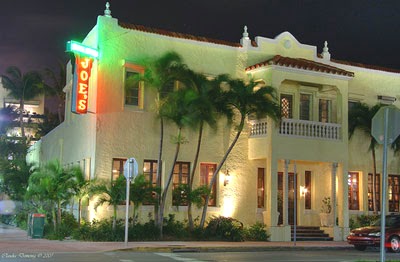
And that means: STONE CRABS. Anyone who has been to Miami Beach knows Joe's. It's been renovated and is a lot bigger than the old days. Back then you waited two hours stuffed into a narrow bar. Now you wait maybe an hour in a couple of anterooms and a bar. But if you go all the time, you get in right away. You have to know the trick.

Joe's has a little takeaway cafe now. I recommend you try it for lunch when things aren't as insane. Stone crabs are supposedly eco-friendly, because the crab grows another claw. I'm not positive this is the case and anyway it must hurt the crab to have his arm torn off, but please: they are divine and I don't want to think about it.


Since returning from Miami I've hit the ground running. Along with Erin Elder I'm co-curating an exhibition called "All the News That's Fit to Print," art that uses the New York Times, at the Center for Contemporary Art here. The artists use the newspaper in varied ways. Some use the paper itself for sculptural and wall based works, like I do. One artist whose work I recently discovered is Elissa Levy, from Brooklyn. Here is one of her works that will be in the show, "Expected to Rise."
Other artists highlight and collect bits of content from the paper- here is a work by Pat Boas, of Portland, Oregon, in which she has traced heads from photos on the front page, each drawing consisting of tracings from a full month, with a total of 12 drawings in the series, representing one year:
Everyone bemoans the sad fate of daily newspapers. With Jeff Bezos buying the Washington Post, it should be interesting to see what new ideas he comes up with. I know the Times has invested in more multi-media reporting, trying to keep up the subscriber base. Personally, I still read the print version of the Times every day and have been for maybe forty years, but I like to read it online occasionally when one of those multi-media stories runs. There was recently a series on a homeless child in New York that was heartbreaking- what is now referred to as "long form" journalism at its best in my opinion. To be continued. Meanwhile, the front page with its compelling above the fold photograph continues my morning ritual.


Monday, August 12, 2013

the desert

Growing up in Miami Beach, then living in New York and Connecticut for so many years, I was used to humidity and green-ness. The desert has neither, but this is the monsoon season, meaning that we get rain fairly often, sometimes a bit every day, sometimes a heavy rainstorm that sends water rushing into the arroyos with great force. I live near the Santa Fe River bed, which used to actually be a river, but is an arroyo now. Arroyos are dry stream beds that fill with water occasionally, during heavy rains. They can be dangerous actually, because if anyone is in there and the water starts to flow, it can cause drownings. We get flash flood warnings here when that's about to happen, but maybe the kids playing didn't get the alert.

Anyway, during monsoon season, the desert starts to grow grasses and things and it actually looks green around here. Also, flowers bloom. It's interesting that the landscape here is at its most beautiful in September. I've posted about the aspen trees in the past. Today I'm posting a photo of a plant I'm kind of obsessed with, jimsonweed. The bush we walk by is pretty large and the flowers are large-ish too so I can see from afar when it's in bloom. For a while it was so dry, no flowers to be seen, but lately every morning it's got lots of them. They bloom at night so by noon they're closed. They don't last long at all. I'm pretty convinced that they only bloom once, but a friend says that's not so. This plant is very poisonous, which makes it more exotic seeming and a little sinister.

Georgia O'Keeffe painted them often. Here's just one example. 

The plants in the desert are very sculptural and seem almost prehistoric. I try to capture them when they are in bloom but it seems like I never have my phone with me at the right time and the next time I walk by them the flowers are gone. The plant life can be very ephemeral. One day a cactus will look all brown and gnarly, and the next day a beautiful pink flower will have appeared.


Friday, July 26, 2013

infinity


The artist Walter de Maria died yesterday. 

I saw this wonderful work at LACMA last year. It took up the entire Resnick Pavilion there and was meant to catch the light in different ways. I always enjoyed de Maria's work- the Broken Kilometer and Earth Room in Soho in NYC were like art touchstones. They were just There, through the years, supported by the Dia Foundation, which also supports Lightning Field here in New Mexico. I have yet to see it- you have to make an appointment, then they pick you up and take you to a little cabin, where you stay overnight and are free to wander the landscape and enjoy the de Maria piece. 400 polished stainless steel poles, set in the ground in such a way that they are perfectly aligned at the top. An incredible feat of planning and engineering. Maybe not like the Great Pyramids, but something that inspires awe. 

De Maria's work was about the finite and the infinite at the same time. The work was strictly delineated by imagined or built borders, or it was titled by its size (as in "Broken Kilometer.") But the scale was such that you almost couldn't see its end. A horizon would form and you would be aware that yes, there is an end, but the view seems limitless and overwhelming. He was a singular artist- I can't think of anyone who has created work that is quite like that, and he will be missed.

Saturday, July 6, 2013

where does inspiration come from?

Someone posted this on Facebook the other day and I saved it. With all the controversy and discussion about appropriating images, it's easy to feel caught on one side or other of a bright line of so-called originality.

I remember one time hearing Chuck Close speak. He said that he, like all artists, stood on the shoulders of all who had gone before him. To me that was not just about clearing a path, though that's a part of it, not just about being a mentor, though that's a part of it too; but also that we look at other work, we digest, we ponder. Maybe those guys who painted on the walls in Lascaux didn't have any other art to look at, but since then, we have.

The internet has given us a great gift here, but it's a bit of a hot coal, and it also requires some responsibility. I live in Santa Fe. I get to New York, to California, and other places that have some terrific museums and galleries, but for me scrolling through tumblr is great fun and sometimes I come across something that really hits me. (Often, actually.) I say it requires responsibility because sliding an image onto your desktop is one thing; reposting it somewhere, such as pinterest or tumblr, is another, and I would never post something without a link to its author's website. (There is software that allows you to embed this information, invisibly, into your image. See digimarc.)

Anyway, a couple of weeks ago I came across the work of Marisa Merz. I can't link you to a website because she has none. I think she may be in her 80's- she is the widow of Mario Merz, and both of them are part of the Italian group of artists engaged in what they called arte povera. She has been honored this year at the Venice Biennale. She shows with Barbara Gladstone in New York. I wish I had seen that show!

So here is a piece of hers, a small one. There are so many things I love about this little piece. I love the apparent casualness of it- almost like she found a bunch of wood and piled it up together. Notice how the image and the wood that extends beyond it is all pushed to the left and the use of gold on such a humble work. She used the wood (all bits of found wood, as I understand) to extend the diagonal in the image- or maybe it was the other way around. There's not a lot of color. Then it's just put on this funny base of sorts, and being placed on a fancy shmancy marble lintel adds a bit of humor and contrast.

Looking at images of hers made me think about how I might work with paper and wood in a less polished way. I really love the nature of paper, and paper comes from wood. Why not combine them? And then ink and gold leaf have their own materiality. Also, I just had a framer possibly destroy a piece by stupid accident- why have to deal with framers at all? Now you might ask, how do you protect and dust a paper piece that isn't framed? And I say: carefully. 


Sunday, June 2, 2013

accretion

Before posting today, I was trying to remember the first time I saw El Anatsui's work. I think it was at Jack Shainman gallery, where he has been showing for many years; or it may have been at a museum show. It had an immediate resonance for me. When I was in New York in April I visited his wonderful retrospective at the Brooklyn Museum.
The sheer magnitude of the work is what strikes you first- I want to say it's magisterial, because the large pieces seem like robes, or tapestries, and their scale requires interiors that might be seen in a cathedral, or a castle. They sparkle and glisten like jewels and gold leaf. But close inspection reveals that they are made of millions of bits of metal- bottle caps and the little metal sleeve which is wrapped around the neck of liquor bottles and that breaks away from the cap when it's twisted off. Each of them is punched, and wired to its neighbor, and the colors are collected in discrete areas that are then woven together. 
Some years ago I went to South Africa, and I knew that there was a tradition of making things with bits of metal, as well as wood, plastic, and whatever was around. El Anatsui is a professor at the University of Nigeria, and his work speaks to so much that is good and not as good in Africa. The continent represents all of the cultural influences of a colonialized area, along with the beauty of traditional tribal forms. El Anatsui's materials come from a distillery in Nsukka. A video being screened at the museum shows huge piles of bottle caps- representing a lot of liquor consumption. The videos also show the artist with his team of artisans, creating portions of the works, then arranging them to be wired together. Now that he is world famous, he has the means to make a lot of work. The retrospective was enormous, and one could mutter that some of the work could have been left out. But some of the pieces were so beautiful, overwhelming really. If the purpose of art is to create a sublime experience, this work is exemplary. 
I've shown his work to my students on many occasions. To me, it represents not just the beauty that can be found in mundane, even discarded, materials; how accretion of a unit creates something that transcends its original form; and how work can be made in a collaborative way, forming community among its makers.

There are many other images of El Anatsui's work in the links above, and on other online sites.


Sunday, March 10, 2013

off the radar

This past week the New York art fairs took place and normally I'd try to be there. Not because I saw amazing and wonderful art, because that's not what art fairs are about. The amazing and wonderful art, when it's shown in that context, becomes not so amazing and wonderful. Too much stuff, too big, too much visual shouting for attention, in the midst of white cubicle after white cubicle, or in the case of some fairs, all in the same room begging for attention, which doesn't do anything much good. For me, going to New York for the fairs is to reconnect with friends, and sometimes I don't go to the big Armory show at all, preferring the smaller fairs like Volta, which is organized as solo shows in each booth. I did feel a little out of it though, reading about them and hearing people talk about them on Facebook.

Today I read a blog post called "Resisting Pier Pressure,"which is a good read, by one of my favorite artists, Mira Schor. Her blog, A Year of Positive Thinking, is thoughtful and informative, as Mira has a long history of critical writing. I recommend you add her to your list of blogs to follow. I have one of Mira's works on paper that I bought at a benefit for AIR, the feminist women's cooperative gallery, still going strong after 40 years.

Here is one of Mira's works, from her website:

The truth is, as much as people bemoan the demise of galleries, I often find amazing and wonderful work when I'm in Chelsea, or the Lower East Side, or wherever there is a gallery space that has a thoughtful and well-run program. Without the pressure of having to see everything, throwing down an espresso to keep moving up and down the art fair aisles. 


Thursday, February 21, 2013

there went that resolution

Really ridiculous. What kind of a self-promoter am I? First of all, after resolving to post more often, here it is the end of February and I have not posted since the day after Christmas. Not great at following through, obviously. But there are extenuating circumstances. This semester I'm teaching three classes and am curating the Al-Mutanabbi Starts Here book exhibition at school. I've hardly gotten to the studio at all, which always makes me a little crazy. If only I didn't have a dog to take care of, too. But you dog owners know it's worth it to take their needs into account. It's just sometimes I feel she's running my life instead of the other way around.

Anyway, today I noticed a whole lot of traffic to my website from  a blog called booooooom.com. If you're reading this, you may very well have gotten here from there. Well, thanks Lana, whoever you are, and the other wonderful blogs who have featured me in the last months- jealous curator, youme&charlie, designtaxi, and others, besides the big Kahuna, huffingtonpost.com. It's been exciting and gratifying! In fact, the year has started off fantastically so far.

My work is in an exhibition at the New Mexico Museum of Art called "Art on the Edge," and it was curated by Toby Kamps, who is the curator at the Menil Collection in Houston. Very prestigious. It opened in January and I was thrilled to find out that the museum has chosen my work for their permanent collection! Here is a snapshot of the installed work taken with my phone. I hope to have better photos provided by the museum at some point.


And as for other news, a new gallery, Fitzroy Knox, which will be based in NYC, has added me to their program. For now they're doing the art fairs, but they intend to look for space in the city next year. A new venture, very exciting. And I'll be in a group show of works on paper in CB1 gallery in Los Angeles at the end of June. 

And now, I have to get back to real life. The dog needs walking.


Wednesday, December 26, 2012

it's about the weather

Gaetano Pesce's America table at Design Miami
New year's resolution: post more.

I have curly hair. Here in Santa Fe, curly hair is not very common. For one thing, it's so dry that it's hard to keep the curls. On the other hand, if you labor to keep your hair straight, the southwest is the place to be. I mention this because last night a friend with curly hair was complaining about it. Much better to live back east where the humidity keeps curly hair just this side of frizz if you use the right product. She said, you really should choose where you live based on how your hair behaves.

Speaking of humidity and frizz, I went to Miami at the beginning of December for Art Basel Miami Beach and all the satellite fairs (that link takes you to a video tour.) So much has been written about them that I don't have much to add, but to say it was a mob scene, gridlock everywhere. Best to park not so close and walk. Friends who tried to get to some of the larger parties told me it was like trying to get into a rock concert, and not fun. But I'm sure if you were a collector or an important curator, or a blue chip gallerist, there was plenty of champagne and hobnobbing. The weather was beautiful, perfect Miami winter days of 75 degrees and soft breezes.

Since I've been writing for adobeairstream, a website dedicated to the arts in New Mexico, Colorado, Texas and Arizona, my editor asked me to write about the design fair, Design Miami. Here is the link to that piece:


Wishing everyone happy holidays! And a new year of peace and hope.

Tuesday, December 4, 2012

it's all such a big unknown

Today is the birthday of Rainer Maria Rilke. So I wanted to post my favorite quote from his Letters to a Young Poet, the result of a ten year correspondance with a young man seeking his advice on his poetry. Here is an excerpt:
"You are so young, so much before all beginning, and I would like to beg you, dear Sir, as well as I can, to have patience with everything unresolved in your heart and to try to love the questions themselves as if they were locked rooms or books written in a very foreign language. Don't search for the answers, which could not be given to you now, because you would not be able to live them. And the point is, to live everything. Live the questions now. Perhaps then, someday far in the future, you will gradually, without even noticing it, live your way into the answer."

How hard it is to "live the questions!" It reminds me that even in dark moments, it's important to remember that the darkness will pass. But so will the good times! And that trying to force an answer is guaranteed to create anger and frustration. Maybe by the time you get to my age you start to recognize that everything goes in cycles and we have very little control over the outcome. Serenity prayer, anyone? 
For me it's comforting to think that staying in the moment, eventually the answers will come.

Wednesday, November 7, 2012

morning in America

I'm old enough to remember the Ronald Reagan ads for his re-election back in the day, 1984. There was a very effective one called "Morning in America." It was a fuzzy, nostalgic, and patriotic piece, only 30 seconds, showing a cowboy, a wedding, people raising flags, with a voice-over about low inflation, high employment, all the things about what was Good. And of course he got re-elected and because of his trickle-down economics the country went on a downward swing that we haven't recovered from, despite some good years during the Clinton administration.

I wish we could have seen well-produced ads like that one this year. But no, every political ad was negative, horrible. Paid for by secret groups that were funded by who knows whom. Finally it's over and it's morning in America and Obama is still our President. He's far from perfect, but he and his family make me proud. At least for today, I can carry that around with me.

Wednesday, October 31, 2012

the force of water

Twenty years ago I lived in Rowayton, CT, a little shoreline town about 40 miles from NY, when a powerful Nor-easter rolled through. It was December, I was married but my husband went off to work that morning. I remember watching the tide come in- rolling down my street, carrying everything in sight along with it. It was terrifying. The basement filled immediately and I stood at the basement stairs watching the water creep higher and higher, ultimately stopping maybe an inch or two below the floorboards of the house. Electricity was shut off to the area to prevent fires from electrical panels, it was cold and we were newbies so we had no generator or pump. My husband waded down the street to get home and the water was chest high. Ultimately there was extensive damage to the basement but it was covered by insurance. It was uncomfortable and a pain, but we were lucky.

Of course all this came back to me this week, seeing the devastation of Hurricane Sandy. No one expected the flooding that occurred. People had put things a few feet off the ground, but in many cases it wasn't enough. Photos that I saw were shocking, and I was glued to CNN and Facebook for hours. The loss of life is horrible, in many cases could have been prevented. But what to say about the entire neighborhood of Chelsea galleries, many of which suffered terrible damage, thousands of dollars of art lost, besides damage to their offices- and the artists whose studios were under water, in some cases from the miserable Newtown Creek between Greenpoint and Long Island City, work lost, toxic chemicals from the creek permeating everything. My heart goes out to all who will have many sad hours cleaning up and repairing, and getting used to the losses.

You can read about it here and see the shocking photos.

Tuesday, September 11, 2012

I remember the clear blue sky


Billy Collins was poet laureate in 2001. He wrote this poem for the one year anniversary of September 11th. 

The Names
Yesterday, I lay awake in the palm of the night.
A soft rain stole in, unhelped by any breeze,
And when I saw the silver glaze on the windows,
I started with A, with Ackerman, as it happened,
Then Baxter and Calabro,
Davis and Eberling, names falling into place
As droplets fell through the dark.
Names printed on the ceiling of the night.
Names slipping around a watery bend.
Twenty-six willows on the banks of a stream.
In the morning, I walked out barefoot
Among thousands of flowers
Heavy with dew like the eyes of tears,
And each had a name --
Fiori inscribed on a yellow petal
Then Gonzalez and Han, Ishikawa and Jenkins.
Names written in the air
And stitched into the cloth of the day.
A name under a photograph taped to a mailbox.
Monogram on a torn shirt,
I see you spelled out on storefront windows
And on the bright unfurled awnings of this city.
I say the syllables as I turn a corner --
Kelly and Lee,
Medina, Nardella, and O'Connor.
When I peer into the woods,
I see a thick tangle where letters are hidden
As in a puzzle concocted for children.
Parker and Quigley in the twigs of an ash,
Rizzo, Schubert, Torres, and Upton,
Secrets in the boughs of an ancient maple.
Names written in the pale sky.
Names rising in the updraft amid buildings.
Names silent in stone
Or cried out behind a door.
Names blown over the earth and out to sea.
In the evening -- weakening light, the last swallows.
A boy on a lake lifts his oars.
A woman by a window puts a match to a candle,
And the names are outlined on the rose clouds --
Vanacore and Wallace,
(let X stand, if it can, for the ones unfound)
Then Young and Ziminsky, the final jolt of Z.
Names etched on the head of a pin.
One name spanning a bridge, another undergoing a tunnel.
A blue name needled into the skin.
Names of citizens, workers, mothers and fathers,
The bright-eyed daughter, the quick son.
Alphabet of names in a green field.
Names in the small tracks of birds.
Names lifted from a hat
Or balanced on the tip of the tongue.
Names wheeled into the dim warehouse of memory.
So many names, there is barely room on the walls of the heart. 

Sunday, August 5, 2012

ugh stuff

Today is Sunday and Sunday means: house cleaning and laundry.

Quandary: How to keep the house clean, the bills paid, the newspaper read, the meals cooked, the dog walked, and still make art. I wish I had a cleaning lady, a cook, and an assistant.

The assistant would clean up my computer files, put images into the right folders with the proper meta-data, so when I apply for things I have the information right there and I don't have to go look at my website to see the size of things, or wonder what the size of the file is. The other day I decided to begin the task of filing things properly in Adobe Bridge. This meant googling how to put the info in, which wasn't that obvious, but once I knew that and the keystroke shortcut, it didn't take long, at least for one group of images.

So I organized my NY Times pieces, and for each of them I have a large tiff, a large jpeg, and a medium jpeg. That should do it, I thought. But now the bad news: I lost one. Yes, somehow it has gone missing from my studio. I cleaned out every flat file drawer in case I had put it somewhere in haste, because the rest of them are where they are supposed to be, in a foam core folder in a drawer, carefully sandwiched with glassine. Could I have accidentally thrown it out? Preposterous. And yet- it's just not there.

I have work in a show right now in the Axle Contemporary Gallery, about which I posted a while back. I told Matthew about the missing art, and he said it's now in the collection of the Caja del Rio Landfill. Here it is, for posterity's sake:

Postscript: After all that angst, I checked my gallery's inventory sheet and to my surprise, this piece had been framed and sent to them. Confirming that I need an assistant, or at least, better filing. VERY happy to have located it, and at least my flat files are reorganized. 

Tuesday, June 26, 2012

more on the subject of age

Last Thursday the mother of a dear friend of mine died of lung cancer. She was two years older than me. I had only met her a few times and we hadn't exchanged more than a handful of words, but she was lovely and her death was peaceful. She didn't suffer with the disease for a long time.

Tonight the news was published that Nora Ephron had died at age 71. This actually brought tears to my eyes. Of course I didn't know Nora Ephron. Yes, I once perused the small kitchen gadget wall at Zabar's right next to her. I don't remember if I bought anything or if she did. This was years ago when we both lived on the Upper West Side of Manhattan. But there was something about her that made it seem like she could have been a relative of mine. Someone, actually, whom I wish WAS a relative of mine. Someone funny and smart and well-connected, with a keen sense of what people were really thinking, especially Jewish women my age who had children, philandering husbands, insecurity about our looks, and an appreciation for shopping. I once read an interview with her in which she said she only had black clothing. Lots of clothes, all of them black. She said it made it so much easier to get dressed. This is only one reason I loved her. Another one was that she was slightly odd looking, with one eye a little droopy and a big toothy smile. So many times I'd read a piece of hers and marvel at how she "got it." The movies were a bonus. Yeah, the fake orgasm scene in "When Harry Met Sally." But there were so many great scenes, so many terrific essays. Thanks, Nora.

There are numerous links to her stories online. I notice the New Yorker posted this link, a fairly recent piece that any New Yorker will connect with. It makes me homesick, and it makes me happy I still own an apartment in New York and so I can live with the fantasy that I can always move back.


I don't know if the magazine site will allow full access to it, but I hope they will:

http://archives.newyorker.com/?i=2006-06-05#folio=034